Books
The Best 10 Books I read in 2025
Happy New Year! This past year like many of you I read a lot of books about technology in general, and about AI in particular. In fact three of the five books I included in my mid-year 2025 summer list were technology related: about Machine Learning, Nvidia, and Huawei. I also read my other favorite non-fiction genres - science, history, and biographies. And one lovely fiction book - with which I will kick off this year's list.
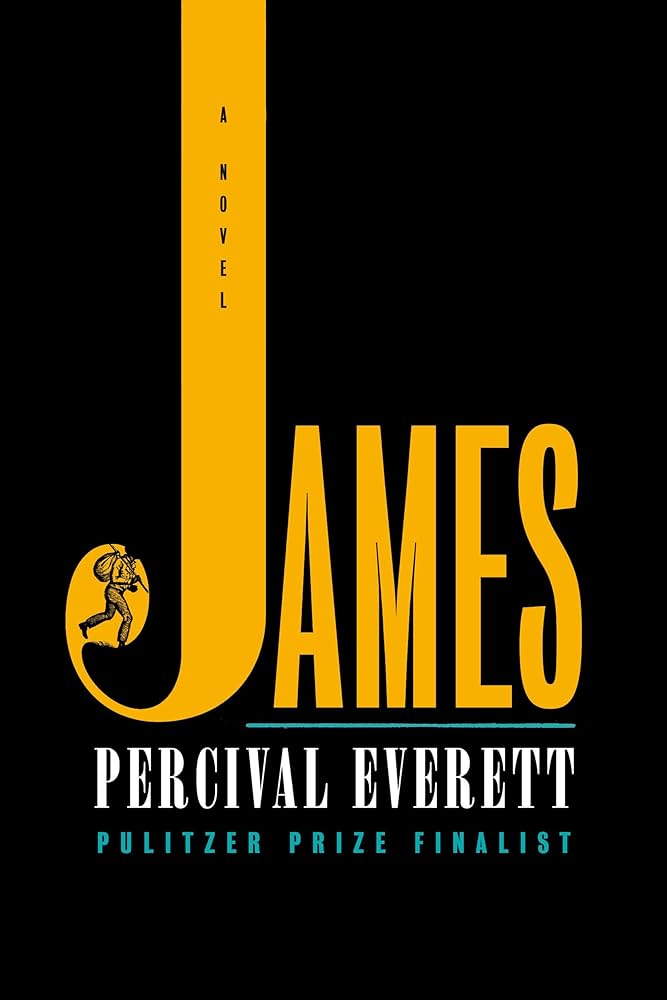
James by Percival Everett
I'd read Mark Twain's Adventures of Huckleberry Finn when in school and was intrigued about this retelling from the perspective of the enslaved Jim. The author, Percival Everett won both the 2025 Pulitzer Prize for Fiction and the National Book Award for Fiction - and its no surprise why. This is a very intelligently written book that claims back the identity and dignity of Jim: to start with, the book is called James and not Jim. Throughout the book James speaks in 'regular' English to other slaves even as he code-switches to a dialect when speaking to white people so as not to arouse suspicion. He also deliberately dumbs himself down in such conversations to conform to their stereotypes. While each encounter he has with a white person seems depressing (even the supposedly non-racist troupe leader has clear expectations of what black people should and should not do) it still ends up being a hopeful and uplifting story with James attempting to seize control of his life and seeking freedom for himself and his family. Read this book to get a sense of what it was like to be enslaved in the American South and for a very different treatment of the times from Mark Twain's novel.

If Anyone Builds It, Everyone Dies by Eliezer Yudkowsky and Nate Soares
Computer Science in general and writing software even more so are young fields. Thus far, software has meant programmers writing deterministic code i.e. inputs A and B always result in outputs X and Y - and this can be tested and verified. The term the authors use for this is 'crafted'. LLMs on the other hand, they argue, are a different beast altogether where they aren't crafted but rather 'grown' almost like a plant or, dare we say it, a life form. We don't really understand how they work or even why they work - just that they work. And with increasing amounts of compute thrown at them, LLMs get more 'smart' and 'powerful', the authors fear that we are building things with no real understanding of the risks because we don't actually understand the inner workings. Lots of great analogies throughout the book at the beginning of every chapter to help frame the arguments. My first book of 2025 was Nuclear War by Annie Jacobsen and this was the very last book - a different apocalyptic scenario. Hopefully we will figure runaway AI also out much like we have managed 80 years without a nuclear war.

Gods, Guns and Missionaries by Manu S. Pillai
I have recommended other works by Manu Pillai in earlier years and this is also an excellent book. Earlier in the year, I read The Hindus by Wendy Doniger and while it was a serious and well-researched book, it could sometimes feel like it was all over the place. Pillai however stays focused on the "modern" and tells a compelling tale of how the religion developed, how it encountered British colonialism and how that encounter changed it and the people of the country. It's a heavy tome of some 564 pages but the last nearly 250 pages are just footnotes!
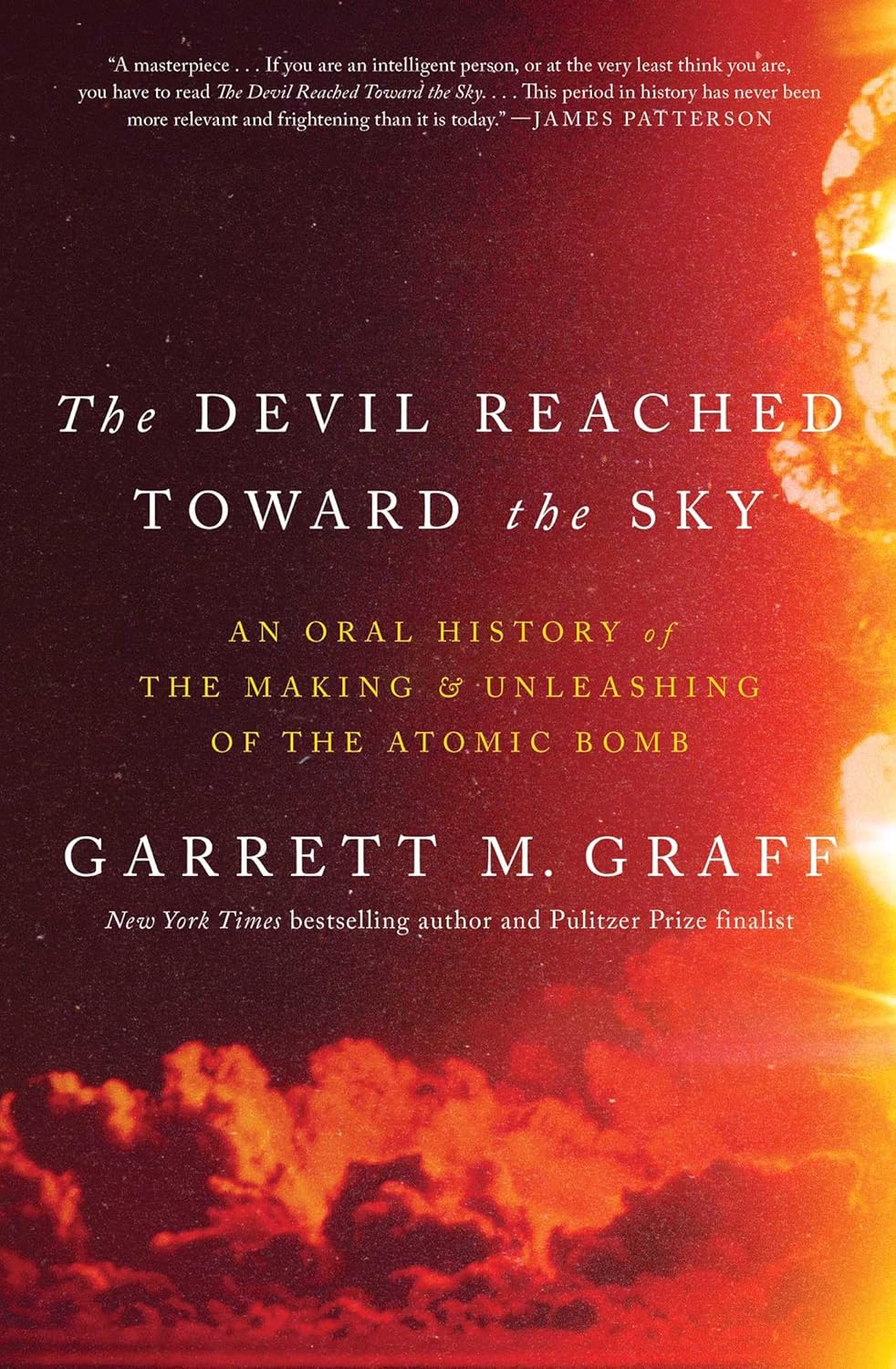
The Devil Reached Toward the Sky by Garrett M. Graff
Garrett M. Graff is now one of my favorite authors and in earlier years, I've recommended both The Only Plane in the Sky and When the Sea Came Alive. This book is about the building and detonating of the atom bomb in WWII. It is told in the now-familiar oral history style where different characters speak their stories, roughly in chronological order. Everything from the lead up to the war to the advancements in physics that opened the possibility of such a weapon, to the politics and logistics of building it and finally to the dropping of the bombs on Hiroshima and Nagasaki. Another excellent book and another must-listen/must-read!
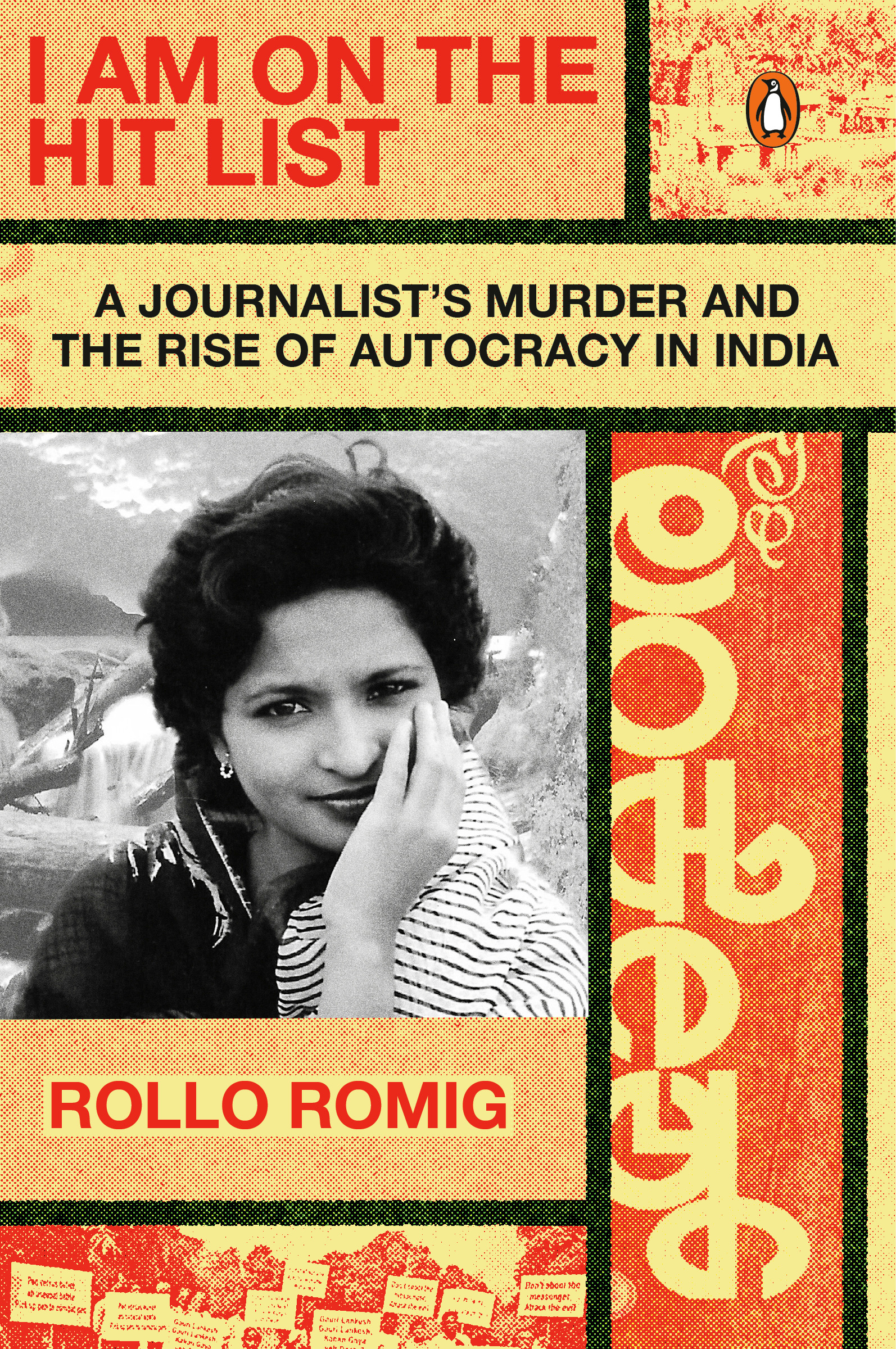
I Am on the Hit List by Rollo Romig
In September 2017, Gauri Lankesh, a journalist and activist, was shot dead outside her own home in Bangalore. This led to a wave of protests and soul searching about the state of a free press in India and investigations that took on a life of their own without quite getting to the bottom of the killing. Was it a single person or a single organization that ordered the killing or was it a build-up of several different organizations and their campaign of intimidation? Who pulled the trigger vs who ordered the killing? This turned out to be a surprisingly gripping read and I highly recommend it.

Here Comes the Sun by Bill McKibben
I thoroughly enjoyed this book as it was positive and uplifting. Solar energy is an option whose time has come - even if most of us don't realize it. The days of Solar (like other 'alternative' energies) being seen as a cleaner but more expensive option are long gone. The cost of solar is now lower than fossil fuels and only going to fall further. Some of the statistics Bill McKibben shares are astonishing. Here are just two. 1. California has installed so many solar panels that it saw a 40% drop in its use of natural gas to generate electricity in 2024 vs 2023. 2. China (the world leader in Solar) was installing the equivalent of an entire coal-fired power plant every eight hours! It left me feeling good about many billions in the world having access to cheap - and clean - energy. It also made me wonder how the geopolitics of the world would change. What happens for instance if the US no longer needs fossil fuels to meet its electricity generation needs? What happens to its relations with oil-rich countries like Saudi Arabia? What happens to giant American companies like Shell and Exxon? Fascinating book!
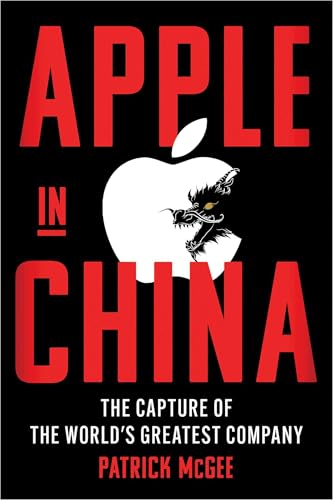
Apple in China by Patrick McGee
The general narrative is that Apple (and many other American companies) all moved to low cost locations like China with the result that it has hollowed out the US manufacturing base. There is some truth to this of course! But McGee's focus is on less on how Apple might have exploited China and its cheap labor and more on how China itself has navigated to a place where Apple is beholden to it and its political leaders. The tagline "The capture of Apple..." is an apt description of the book. China - and its government - so completely embraced Apple's demands that it quickly became the ONLY country in the world that could meet Apple's demands both in quality and quantity. Tim Cook once famously said if he wanted to get a bunch of tooling engineers together, in the US he wouldn't even be able to fill the room. In China, Cook said that he could fill "multiple football fields" with tooling engineers! And it is not just tooling engineers but the entire ecosystem that Apple has given birth to and spent billions training and nourishing. Given this concentration of talent in China it is an interesting question to ask - does China need Apple more or does Apple need China more? I expect to be reading a lot more about China in 2026 and beyond.

Who Is Government by Michael Lewis et al
This book isn't solely authored by Michael Lewis but is rather a collection of essays and 'headlined' by him. The common theme is that the US federal government which has of late been reviled as full of 'fraud, waste, and abuse' is, in reality, filled with incredible people who have devoted their lives to serving the public and are so publicity-averse that they actively avoid the spotlight even when asked. In Who is Government, through story after story, Lewis and his co-authors bring to light the work of some unsung hero who has saved either thousands of lives or millions of dollars - or both. The best story was written, as expected, by Michael Lewis himself. He tells the story of Chris Mark who works for the Department of Labor's Mine Safety and Health Administration - an appropriately enough underground organization! Mark came up with a new method to design mine pillars to prevent them from collapsing and saved thousands of lives by doing so. This is not to say that the US government is perfect - far from it - but the authors give many examples to push back and insist that is not the profligate mess that many make it out to be.
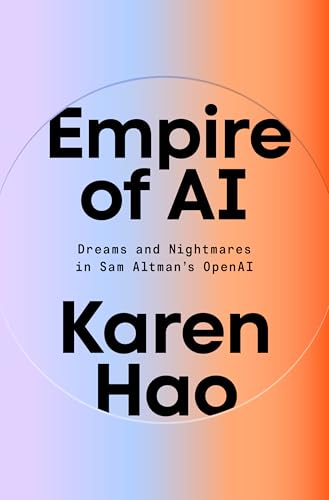
Empire of AI by Karen Hao
I'll confess I was afraid this would only be a polemic against OpenAI and its founder Sam Altman. There is a lot of criticism of the company and of Altman himself. The title seems like a nod to the Empire of Pain which was about the abuses of the Sackler family for wealth in the pharmaceutical industry. But it is also thought-provoking in that it talks also about the unseen and under-appreciated impact that the huge investments in AI are having worldwide. Again, no easy answers here but plenty to ponder.

Breakneck by Dan Wang
Dan Wang's book contrasts the rise of China with what appears to be a decline - or, at a minimum, a stagnation - of the US. The heart of his thesis is that China has now become the "Builder" - a nation of engineers that has resulted in the greatest manufacturing base in history. The US on the other hand, Wang says, has lost some of its 'mojo' and has now become a nation of "Lawyers" who are forever trying to escape litigation from a maze of rules and regulations - created by themselves. It's an interesting premise but not one that I buy into fully. After all, the US built some truly astonishing things in the 20th century and while China has taken the lead in the 21st century, the side-effects of unregulated growth are yet to be seen and fully understood. And also in a country that is not a democracy the visibility is limited - never mind having a system of checks and balances. Like I said earlier, I expect to read a lot more about China in 2026 and beyond.